
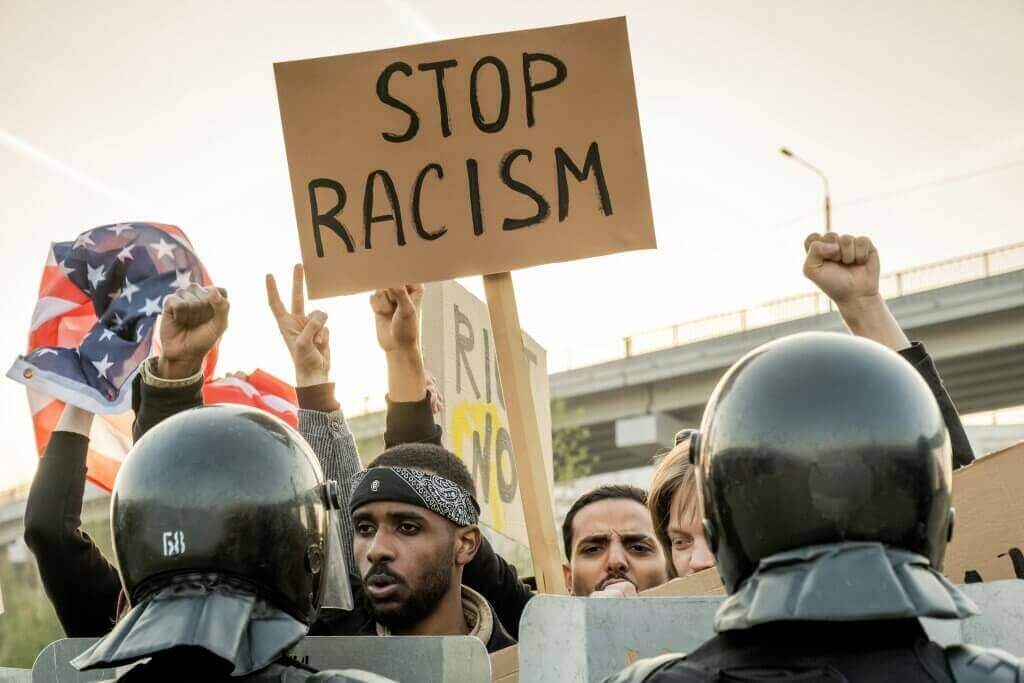
Employees in Northfield, NJ, are protected against workplace racial discrimination under federal and New Jersey law. Employers cannot make hiring, compensation, promotion, disciplinary, or termination decisions based on race, skin color, ethnicity, ancestry, or national origin.
NJ Employment Lawyers, LLC represents employees in Northfield who have experienced racial discrimination, harassment, unequal treatment, or retaliation. Our attorneys investigate discriminatory employment practices, evaluate evidence, and pursue legal remedies against employers who violate workplace discrimination laws.
Racial discrimination is not always obvious. Employers may use performance evaluations, disciplinary policies, restructuring decisions, or other seemingly legitimate explanations to conceal discriminatory treatment. Identifying inconsistencies in these explanations can be critical to establishing a claim.
What Constitutes Racial Discrimination in the Workplace?
Workplace racial discrimination occurs when an employer treats an employee or job applicant unfavorably because of race or a related protected characteristic. These protections extend to every racial group and apply throughout the employment relationship.
Employees in Northfield may have grounds for legal action when they experience:
- Discriminatory Hiring Practices: Rejecting qualified candidates because of their race, ethnicity, skin color, or perceived background.
- Unequal Compensation: Paying employees less than similarly situated coworkers because of race.
- Denied Promotions: Selecting less-qualified employees for advancement because of racial preferences or stereotypes.
- Discriminatory Discipline: Applying workplace policies more harshly to employees of particular racial groups.
- Unfair Job Assignments: Consistently excluding employees from important projects, professional development, or advancement opportunities because of race.
- Wrongful Termination: Firing or selecting employees for layoffs based on racial considerations.
- Racial Harassment: Allowing slurs, threats, offensive comments, or other race-based conduct that creates an unlawful hostile work environment.
- Workplace Retaliation: Punishing employees for reporting discrimination, supporting a coworker’s complaint, or participating in a discrimination investigation.
A racial discrimination claim does not necessarily require an explicit racist statement. Patterns of unequal treatment, inconsistent enforcement of policies, and differences in employment opportunities can provide evidence of unlawful conduct.
Federal and New Jersey Laws Protecting Employees Against Racial Discrimination
Employees in Northfield have legal protections under both Title VII of the Civil Rights Act of 1964 and the New Jersey Law Against Discrimination (LAD). Although these laws address similar misconduct, they differ in employer coverage, procedural requirements, and available legal remedies.
Title VII of the Civil Rights Act of 1964
Title VII prohibits covered employers from discriminating against employees and applicants based on race, color, religion, sex, or national origin.
The law generally applies to employers with 15 or more employees and prohibits discrimination involving hiring, promotions, compensation, job assignments, training, and termination.
Employees pursuing Title VII claims generally must first file a charge with the Equal Employment Opportunity Commission (EEOC) before bringing a federal lawsuit. NJ Employment Lawyers, LLC assists clients with preparing discrimination charges, presenting supporting evidence, and navigating the administrative process.
New Jersey Law Against Discrimination (LAD)
The New Jersey LAD provides protections against discrimination based on race, color, ancestry, nationality, and national origin.
Unlike Title VII, the LAD generally applies to New Jersey employers regardless of workforce size. It also allows employees to pursue qualifying discrimination claims directly in New Jersey Superior Court without first filing an administrative complaint with the New Jersey Division on Civil Rights.
Employees may pursue compensation for financial losses, emotional distress, and other legally recognized harm. Punitive damages may also be available when the applicable legal requirements are satisfied.
Our attorneys evaluate which laws apply to each Northfield employee’s circumstances and determine the appropriate legal strategy.
Understanding Disparate Treatment and Disparate Impact
Racial discrimination claims generally involve two major legal theories: disparate treatment and disparate impact. Understanding the distinction helps determine what evidence is necessary to establish an employer’s violation.
Disparate Treatment: Intentional Racial Discrimination
Disparate treatment occurs when an employer intentionally treats someone less favorably because of race.
Examples include:
- Promoting white employees while repeatedly rejecting equally or better-qualified Black employees because of race.
- Giving employees of color more severe disciplinary penalties than white coworkers who committed comparable violations.
- Requiring employees of one racial group to undergo additional screening or drug testing without a legitimate explanation.
- Excluding employees from management training or leadership opportunities based on racial stereotypes.
- Terminating an employee because of racial bias while retaining similarly situated employees of another race.
Direct statements demonstrating racial bias can be useful evidence, but they are not required in every case.
An employer’s shifting explanations, inconsistent decisions, and unequal treatment of comparable employees may help establish discriminatory intent.
Disparate Impact: Discriminatory Effects of Workplace Policies
Disparate impact occurs when an employment policy appears neutral but disproportionately disadvantages employees of a protected racial group.
Unlike disparate treatment, this type of claim does not necessarily require proof that the employer intended to discriminate.
Examples may include:
- Criminal background screening requirements that disproportionately exclude applicants of certain racial groups without adequate job-related justification.
- Hiring tests that disproportionately disqualify applicants from particular racial groups and are not sufficiently connected to the position.
- Promotion criteria that create substantial racial disparities without an adequate business justification.
- Workplace selection procedures that unnecessarily restrict employment opportunities for members of protected groups.
Disparate impact claims often depend on statistical evidence demonstrating how a particular employment practice affects different racial groups.
Under Title VII, an employer may defend a challenged practice by demonstrating that it is job-related and consistent with business necessity. Other legal considerations, including whether a less discriminatory alternative is available, may also affect the outcome.
NJ Employment Lawyers, LLC evaluates employment records, workforce data, hiring criteria, and company policies to determine whether a practice violates applicable discrimination laws.
Racial Discrimination Involving Hairstyles and Grooming Policies
New Jersey law also protects employees against certain forms of discrimination involving natural hair textures and hairstyles historically associated with race.
Under New Jersey’s CROWN Act, employers generally cannot discriminate against employees because of race-associated hairstyles, including:
- Afros and natural hair textures
- Braids and cornrows
- Locs and twists
- Bantu knots
- Other hairstyles closely associated with racial identity
Employers may establish legitimate workplace appearance and safety requirements, but those policies cannot unlawfully target employees because of racial characteristics.
For example, an employer that prohibits locs or braids while allowing comparable hairstyles worn by employees of other racial groups may be engaging in unlawful discrimination.
Employees in Northfield who have been disciplined, denied employment opportunities, or terminated because of protected hairstyles may have grounds for legal action.
How to Prove Racial Discrimination at Work
Establishing racial discrimination generally requires evidence connecting an employer’s conduct to race or another protected characteristic. The specific legal elements depend on the claim, the challenged conduct, and the applicable law.
For many disparate treatment cases, relevant considerations include:
- Protected Characteristic: Whether the employee experienced unfavorable treatment because of race, color, ethnicity, or another legally protected characteristic.
- Employment Qualifications: Whether the employee was qualified for the position or performing their job satisfactorily, when relevant to the particular claim.
- Discriminatory Employment Action: Whether the employee experienced a discriminatory hiring decision, compensation disparity, demotion, termination, or other unlawful treatment.
- Connection to Race: Whether available evidence supports an inference that racial discrimination influenced the employer’s actions.
- Employer’s Explanation: Whether the employer’s stated reason for its decision is supported by the facts or is a pretext for discrimination.
Not every claim requires the same type of adverse employment action or proof of financial loss. Harassment, discriminatory employment conditions, and other violations may involve different legal standards.
Evidence That May Strengthen a Racial Discrimination Claim
Employment discrimination cases frequently rely on documentary and circumstantial evidence.
Important records may include:
- Emails, text messages, and workplace communications containing racial remarks or discriminatory instructions.
- Performance evaluations showing inconsistent assessments or unexplained changes in ratings.
- Personnel records documenting differences in disciplinary treatment.
- Compensation information demonstrating disparities among comparable employees.
- Hiring and promotion records showing patterns of unequal opportunity.
- Statements from coworkers or supervisors who witnessed discriminatory conduct.
- Written complaints to management or human resources and the employer’s responses.
A comparison of how similarly situated employees were treated can be particularly important.
For example, if two employees commit the same workplace violation but only one is terminated, differences in their racial backgrounds may be relevant when examining the employer’s explanation.
NJ Employment Lawyers, LLC reviews available evidence, identifies potential witnesses, and pursues relevant employer records through appropriate legal procedures.
Racial Harassment and Hostile Work Environments
Racial discrimination does not always involve a termination or missed promotion. Employees may also experience harassment that interferes with their working conditions.
Examples include racial slurs, derogatory stereotypes, offensive images, threats, intimidation, and repeated racially hostile remarks.
Under applicable discrimination laws, race-based harassment may become unlawful when it is sufficiently severe or pervasive to alter the conditions of employment and create a hostile or abusive working environment.
The conduct may involve supervisors, managers, coworkers, or, in certain circumstances, individuals outside the organization.
An employer’s responsibility depends on factors including who engaged in the harassment, what the employer knew or should have known, and whether appropriate corrective measures were taken.
Northfield employees facing racial harassment should document specific incidents, identify potential witnesses, and preserve relevant communications.
Retaliation for Reporting Racial Discrimination Is Illegal
Federal and New Jersey laws prohibit employers from retaliating against employees for engaging in protected activity related to discrimination.
Protected activity can include reporting suspected racial discrimination, opposing unlawful workplace practices, assisting another employee with a complaint, or participating in an EEOC or discrimination proceeding.
Retaliation may involve:
- Termination or demotion following a discrimination complaint.
- Reduced working hours, compensation, or responsibilities.
- Unjustified negative performance evaluations.
- Exclusion from professional opportunities.
- Punitive reassignment or unfavorable scheduling.
- Threats or intimidation intended to discourage employees from exercising their rights.
An employee may have a retaliation claim even when the underlying discrimination complaint is ultimately unsuccessful, provided the applicable requirements for protected activity and unlawful retaliation are satisfied.
Our attorneys examine the timing of employer decisions, communications between management and employees, and changes in workplace treatment to identify evidence of retaliation.
Deadlines for Filing a Racial Discrimination Claim in New Jersey
Employees considering legal action should understand that discrimination claims are subject to filing deadlines.
Under the New Jersey LAD, an employee generally has:
- 180 days from the alleged discriminatory act to file an administrative complaint with the New Jersey Division on Civil Rights.
- Two years from the alleged violation to file a civil lawsuit in New Jersey Superior Court.
For a Title VII claim arising in New Jersey, an employee generally has 300 days from the discriminatory act to file a charge with the EEOC.
Different procedures and deadlines may apply to federal employees and certain other claims. Continuing harassment and other specific circumstances can also affect how filing periods are calculated.
Employees should not assume that reporting discrimination internally to human resources extends these legal deadlines.
NJ Employment Lawyers, LLC evaluates the relevant dates and filing requirements to help employees protect their claims.
Compensation Available in Racial Discrimination Cases
Employees who establish unlawful racial discrimination may be entitled to financial compensation and other relief, depending on the facts and governing law.
Potential remedies include:
- Back Pay: Wages, bonuses, and other compensation lost because of discriminatory employment decisions.
- Front Pay: Compensation for certain future earnings losses when reinstatement is not appropriate.
- Lost Employment Benefits: The value of health insurance, retirement contributions, and other employment benefits affected by discrimination.
- Emotional Distress Damages: Compensation for legally recognized emotional harm caused by unlawful discrimination.
- Reinstatement: Restoration to a position following a discriminatory termination, when appropriate.
- Promotion or Other Equitable Relief: Court-ordered actions addressing unlawful employment decisions.
- Punitive Damages: Additional damages in qualifying cases involving misconduct that meets the applicable legal standard.
- Attorney’s Fees and Costs: Recovery of eligible litigation expenses when authorized by law.
The remedies available depend on the claims asserted, the evidence presented, and applicable legal limitations.
How NJ Employment Lawyers, LLC Represents Northfield Employees
NJ Employment Lawyers, LLC represents workers in Northfield and throughout New Jersey in racial discrimination and related employment disputes.
Our legal representation includes evaluating potential claims, investigating discriminatory employment practices, reviewing personnel records, and assessing whether an employer’s stated justification is supported by the evidence.
When appropriate, our attorneys communicate with employers and their legal counsel, negotiate settlements, prepare administrative complaints, and pursue litigation in state or federal court.
We also assess whether employees have additional claims involving workplace discrimination, unlawful retaliation, hostile work environments, or wrongful termination.
Our objective is to establish the facts, protect employees’ legal rights, and pursue the remedies available under New Jersey and federal law.
Speak With a Racial Discrimination Lawyer Serving Northfield, NJ
If you have been denied employment, paid less, subjected to racial harassment, passed over for promotion, or terminated because of your race, you may have grounds for a discrimination claim.
NJ Employment Lawyers, LLC provides legal representation to employees in Northfield, NJ, who have experienced racial discrimination or retaliation. Our attorneys can review your employment history, examine available evidence, explain applicable filing deadlines, and identify potential legal remedies.
Whether your case involves an individual discriminatory decision or a broader pattern of workplace bias, our firm can evaluate your options for pursuing compensation and holding your employer accountable.
Contact NJ Employment Lawyers, LLC to schedule a confidential consultation about your racial discrimination claim.


