
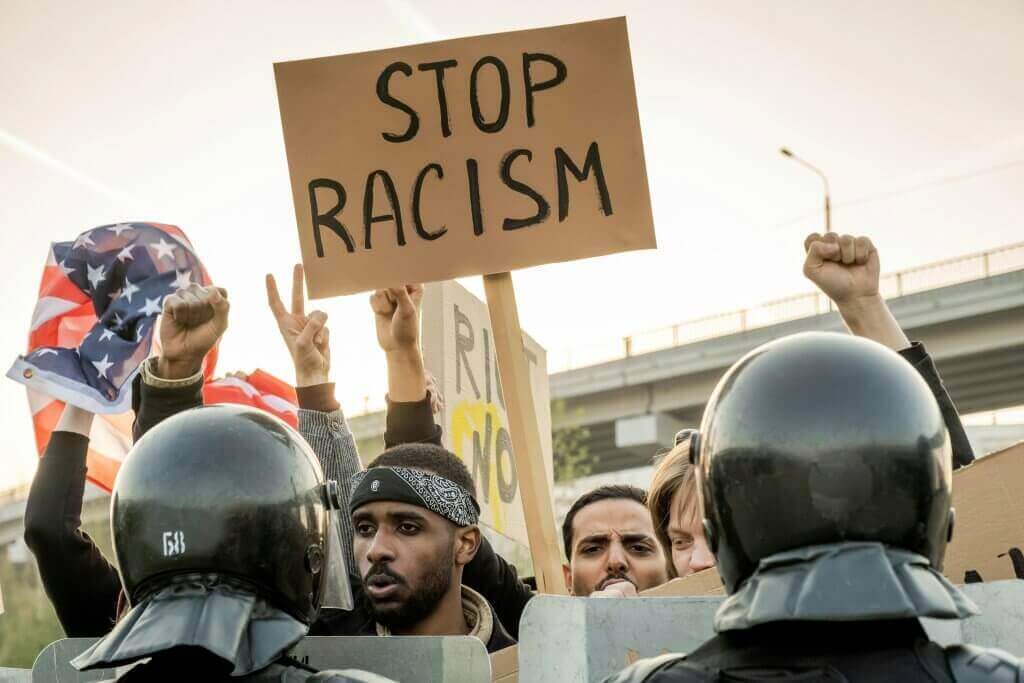
Racial discrimination in the workplace is prohibited under both federal law and the New Jersey Law Against Discrimination (LAD). Employees in Linwood, NJ who are denied employment opportunities, compensation, promotions, or who face unequal treatment because of race, ethnicity, or national origin may have grounds to take legal action. NJ Employment Lawyers, LLC represents workers throughout New Jersey, including Linwood, in racial discrimination claims against employers.
Race and National Origin Discrimination at Work
Employers are not allowed to base employment decisions on race, skin color, ancestry, or national origin. This includes every stage of employment, from hiring through termination. Legal claims may arise when an employer:
- Refuses to hire or promotes less qualified candidates based on race
- Pays employees differently due to racial or ethnic background
- Disciplines, demotes, or terminates employees based on racial bias or stereotypes
- Allows or engages in racial harassment that creates a hostile work environment
- Retaliates against employees who report discrimination or participate in investigations
Even subtle or repeated patterns of unequal treatment can support a discrimination claim when they affect job terms or conditions.
Federal Protections Under Title VII
Title VII of the Civil Rights Act of 1964 prohibits race and national origin discrimination for employers with 15 or more employees. Before filing a lawsuit in federal court, employees generally must first submit a charge of discrimination to the Equal Employment Opportunity Commission (EEOC).
Our firm handles the EEOC process, including preparing and filing charges, responding to employer submissions, and guiding clients through agency investigations and potential settlements.
New Jersey Law Against Discrimination (LAD)
The New Jersey LAD provides broader protections than federal law. It applies to all employers in Linwood and across the state, regardless of size.
Key differences include:
- Coverage of all employers, including small businesses
- Direct filing in New Jersey Superior Court without first going through the Division on Civil Rights
- Expanded remedies for emotional distress and punitive damages in appropriate cases
Depending on the facts, a claim may proceed under state law, federal law, or both.
Building a Racial Discrimination Case
Racial discrimination cases often require detailed evidence showing that an employer’s actions were motivated by bias or that there is a pattern of unequal treatment. NJ Employment Lawyers, LLC evaluates employment records, communications, witness accounts, and workplace practices to determine how discrimination occurred and how it affected the employee.
We pursue recovery for damages such as:
- Lost wages and benefits
- Emotional distress caused by discriminatory conduct
- Punitive damages where employer conduct is especially severe
- Legal fees and related costs where permitted
Employees in Linwood, NJ who believe they have experienced race-based discrimination at work can seek legal review to understand their rights and available claims under state and federal law.
Types of Racial Discrimination in the Workplace
Workers in Linwood, NJ may experience racial discrimination in different forms under both federal law and the New Jersey Law Against Discrimination (LAD). These cases generally fall into two main categories: disparate treatment and disparate impact. Each involves different types of evidence and legal analysis.
NJ Employment Lawyers, LLC evaluates workplace conduct, employment records, and company policies to determine how discrimination occurred and what legal claims may apply.
Disparate Treatment Discrimination
Disparate treatment occurs when an employer intentionally treats an employee less favorably because of race, ethnicity, or national origin. This type of discrimination is based on direct or circumstantial evidence of bias in decision-making.
Common examples include:
- Selecting less qualified employees for promotion based on race
- Applying disciplinary rules inconsistently between employees of different races
- Requiring only certain racial or ethnic groups to undergo additional scrutiny, such as drug testing or performance monitoring
- Penalizing employees of color more harshly for the same conduct as other employees
- Enforcing appearance or grooming policies in a way that disproportionately targets natural Black hairstyles, including braids, locs, or afros
Both federal law and New Jersey law prohibit employment decisions influenced by race at any stage of employment, including hiring, compensation, promotion, discipline, and termination. Employers are required to apply workplace policies consistently and without bias.
Disparate Impact Discrimination
Disparate impact occurs when an employer uses a policy or practice that appears neutral on its face but results in a disproportionate negative effect on employees based on race or ethnicity.
This can include:
- Hiring or testing requirements that disproportionately exclude certain racial or ethnic groups
- Job criteria that are not necessary for the position but create unequal barriers to advancement
- Workplace policies that systematically disadvantage employees from protected groups, even without intentional discrimination
Unlike disparate treatment, disparate impact cases focus on outcomes rather than intent. A policy may still violate the law even if the employer did not act with discriminatory intent, if it cannot be justified as job-related and consistent with business necessity.
Legal Evaluation and Next Steps
Determining whether a claim involves disparate treatment, disparate impact, or both requires a detailed review of employment records, policies, and workplace practices. NJ Employment Lawyers, LLC analyzes these factors to identify violations and pursue claims under applicable state and federal law for employees in Linwood, NJ.
Disparate Impact Discrimination
Disparate impact occurs when an employer uses a policy that appears neutral but has a disproportionate negative effect on employees or applicants based on race or ethnicity. These claims do not require proof that the employer intended to discriminate, but they do require evidence that the policy creates a statistically or practically significant racial disparity and is not justified by business necessity.
Examples include:
- Background check policies that broadly exclude applicants with prior convictions in ways that disproportionately affect Black and Latino candidates, without a clear connection to job duties
- Employment policies or screening criteria that result in significantly lower hiring or promotion rates for specific racial groups without a legitimate job-related justification
- Language or “English-only” workplace rules that are not necessary for safety or job performance and disproportionately affect employees whose first language is not English
Under federal and New Jersey law, employers must demonstrate that any policy causing a disparate impact is job-related and consistent with business necessity. Even when a business justification is offered, employees may still challenge the policy by showing that less discriminatory alternatives exist.
Legal Review of Disparate Impact Claims
Cases involving disparate impact typically require data analysis, comparison of workforce outcomes, and a review of how policies are applied in practice. NJ Employment Lawyers, LLC evaluates employer policies, hiring practices, and workforce statistics for employees in Linwood, NJ to determine whether discrimination exists and whether legal action is appropriate.
Establishing a Racial Discrimination Claim
To bring a viable racial discrimination claim under federal or New Jersey law, an employee generally must show:
- Protected Class Status: Membership in a legally protected group based on race, ethnicity, or national origin
- Job Qualification or Performance: Qualification for the position or satisfactory job performance at the time of the adverse action
- Adverse Employment Action: A tangible negative action such as termination, demotion, denial of promotion, loss of pay, or refusal to hire
- Causal Connection and Harm: Evidence that the adverse action was linked to race and resulted in measurable harm, including financial loss or emotional distress
Strong claims are supported by documentation such as emails, performance reviews, disciplinary records, hiring data, and evidence of how similarly situated employees outside the protected class were treated.
Legal Representation for Racial Discrimination in Linwood, NJ
Employees in Linwood, NJ who believe they were subjected to race-based discrimination can pursue claims under both federal law and the New Jersey Law Against Discrimination. Remedies may include recovery of lost wages, reinstatement, compensation for emotional distress, and attorney’s fees where applicable.
NJ Employment Lawyers, LLC reviews the facts of each case, gathers supporting evidence, and pursues resolution through negotiation or litigation when necessary.


